

Ash Staining and Why it Happens?

Ash Staining and Why it Happens?
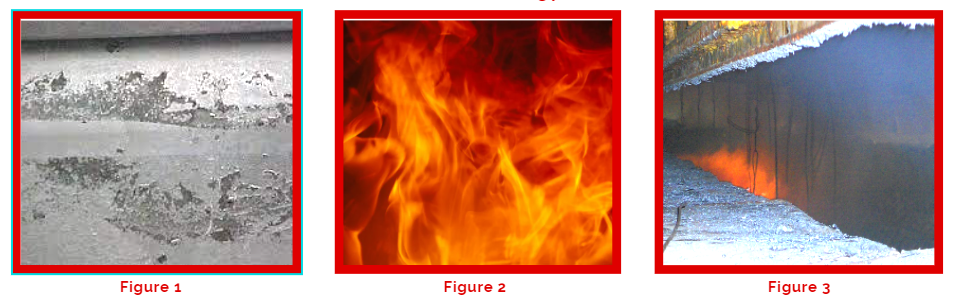
Over time, we at Metals and Chemicals Technology Sdn Bhd (MCT) have witnessed galvanizers from across the globe who have experienced black spots or ash stain (Figure 1) in their final product with the ash generating in the zinc bath. Galvanizers have also reported that in such situation their zinc consumption increased by 10-20% than the required amount which is a huge setback to the galvanizing industry. Although this defect does not affect the quality of galvanized steel, it is still an issue as the price of purchasing zinc is very costly.
Of course, the first thing we did was to investigate as to why this issue happens so commonly. With each investigation, lab analysis and discussions carried out, we found the cause to be different for each case.
Now, I did mention that the ash was generating in the zinc bath but that does not indicate the problem is with the zinc itself. Although, that was where our investigation began, we found out that when the articles are dipped into the molten zinc at temperatures of 440-460°C (824-860°F), flames (Figure 2) are produced at areas where the jigs are in contact with the hot molten zinc. It was due to this the ash is formed in zinc bath (Figure 3). The bigger the flames the higher the ash content. This is also the how the ash stains on the articles are formed.
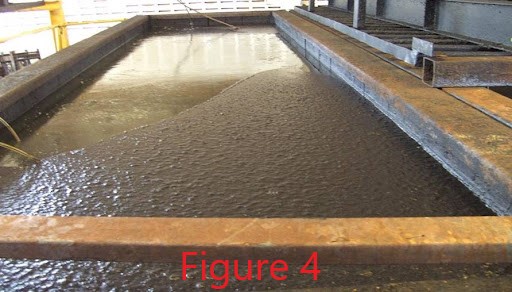
So why are flames produced when the articles come in contact with the molten zinc? To answer this question, we have to look at the articles that are being dipped in. After countless number of experiments conducted in our lab, we found the major root cause for the flames to ignite is due to the presence of oil and water on the articles. Other causes also include high rate of oxidized articles, high content of aluminum (Al) in the zinc bath and usage of wrong flux.
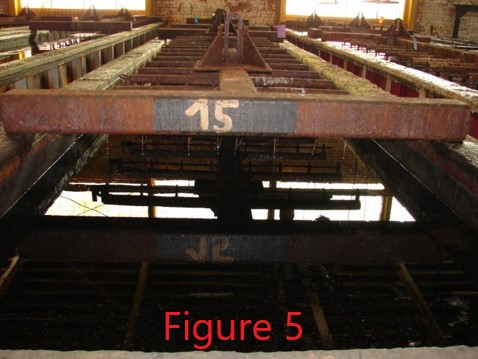
Firstly, these oils are stuck to the surface of the articles due to poor cleaning performance or floating oil (Figure 5) in the pre-treatment stages. The most common way of removing oil from the surface of the articles is by using an alkaline based degreaser at temperatures of 60-70°C (140-160°F) which helps to remove most of the oil. The most commonly used alkaline degreaser in the industry is caustic soda or also known as sodium hydroxide with the chemical formula NaOH at a concentration of 10%. Nevertheless, galvanizers faced another issue in costing due to the quantity of heat used for each jigs cleaned.
At MCT we provided a more effective method of cleaning the oils even the stubborn ones at a concentration of 3-5% and at temperatures of 30-40°C (35-105°F). We introduced a few range of alkaline degreasers (e.g. Reiniger 178 series, Leraclen® ATR series, Leraclen® 1231 series, and etc.) to our clients who saw an improvement in oil removal, heat usage reduction, longer bath life, and of course lower zinc consumption in addition to lower maintenance (Figure 5). This enabled them to improve their product quality and increase their throughput (no time wasted skimming the ash of the surface of the molten zinc). However, we also had some clients who wished to continue using NaOH and improve the cleaning effect. For these clients, we recommended them the use of additives specifically formulated for degreasing purposes. Leratens®RVP series, a surfactant with a make-up of 0.5-1% can be used with 5-10% NaOH. Likewise, these clients also saw improvements in their process and products although not to par as the alkaline degreasers by MCT.
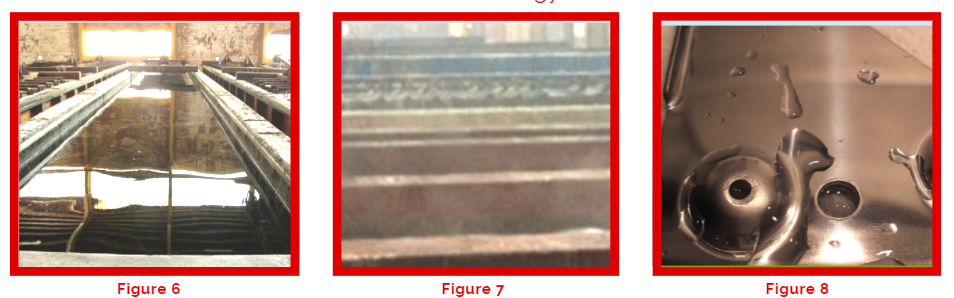
Now you would be asking yourself, sometimes there are some minor oils that are carried over after degreasing, what about that? This is where the 2nd process of the pre-treatment stage comes in. The pickling bath (Figure 6) mainly removes rusts or scales but is also able to remove small amounts of inorganic contaminants and stains such as mild oil. Hydrochloric acid (HCl) at 15% concentration is the common pickling chemical used in the galvanizing industry. With most of the oil removed in the degreasing, the acid will be able to clean the remaining oils left on the surface of the articles thus providing an oil free article for improved galvanizing quality. However, the usage of HCl also has its disadvantages, namely the fumes (Figure 7) and smell generated which is hazardous and unhealthy for workers in the production. Inhaling the fumes generated by HCl can lead to coughing, hoarseness, inflammation and ulceration of the respiratory tract, chest pain, and pulmonary edema (Source: EPA’s Integrated Risk Information System (IRIS) (4)). Hence, MCT formulated an additive that acts as an inhibitor, fume suppressant and oil remover for stubborn oils all in one product. Our Leratens®AV series, Lerapas® 1018 and Lerapas® MCA series additives have benefited clients in suppressing the fume and smell, reduce dissolving iron and acid consumption as well as reduce foaming in their pickling baths based on the requirements needed.

Besides oil, wet surfaces (Figure 8) are also a root cause for the formation of zinc ash which translates to another vital step in the pre-treatment process and that is the drying step. After fluxing is done, the article should be dried out completely before they are galvanized. In doing so, galvanizers are able to prevent zinc ash formation which in return reduces zinc consumption thus saving cost.
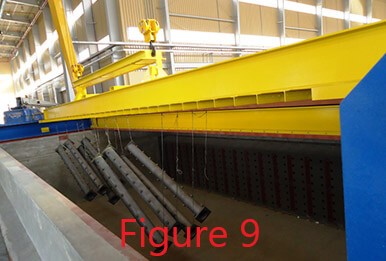
There have been some clients who mentioned that the drying process takes too long therefore in order to prevent the article from oxidizing further they move on to the galvanization step and causing ash staining to take place due to the wet surfaces. Increasing the heat of the dryer (Figure 9) does no good as it will only make operational cost higher and also speed up the oxidation of the articles.
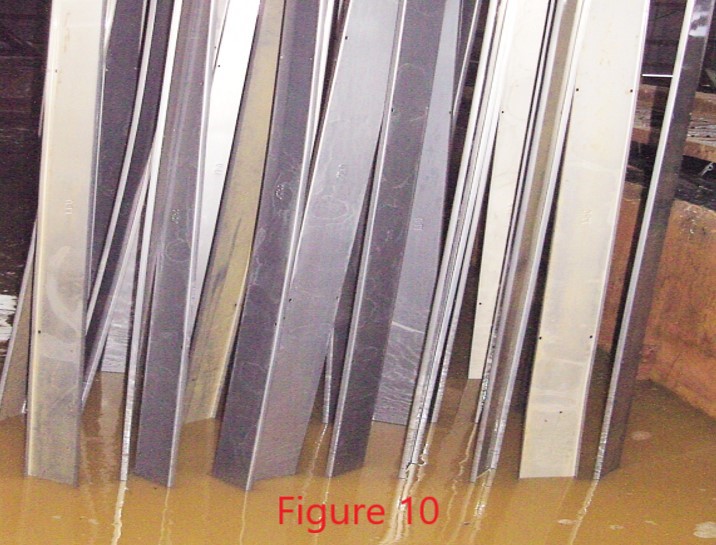
The only way to resolve this is by using proper flux solution that reduces drying time and oxidation of the articles. This is possible with MCT additive Lerapas® Flux, Leratens®Flux Additive FF and Leratens®Flux Additive S which promotes better wetting, reduced surface tension and faster drying. When the article’s surface tension is reduced and wettability is increased, liquids fall off easily from surface of the articles (Figure 10). Hence, when there is less wet surface, drying would be easier and done in a shorter period. Overall, less wet surface, reduced oxidation, and reduced drying time is what prevents formation of zinc ash and black spots in the final pre-treatment stages.
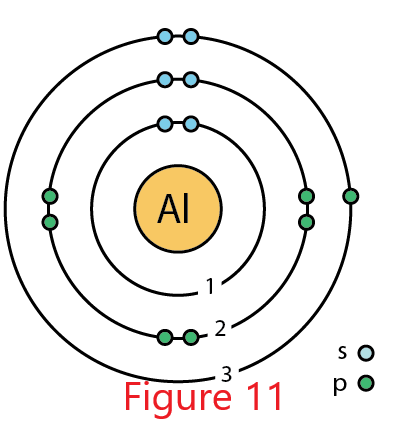
Lastly, the content of Al (Figure 11) in the zinc bath causes black spots/ash staining on the articles while leaving behind a significant number of ashes in the bath. This is due to an imbalance chemical ratio of zinc to aluminum. Aluminum acts as inhibitor that slows down the reaction rate of zinc-iron when added into the molten zinc. However, only a small percentage is needed which is usually in the range of 0.15-0.19% and 0.110-0.135% when producing galvanneal. When it is out of this range, you are very likely to see ash formation in the zinc bath along with the ash stains on the articles. So, it is crucial to maintain the Al content in the bath within the optimal range.

In conclusion, is it possible to prevent ash staining from occurring? Yes! Although this defect does not affect the quality of the galvanized steel in any way, it does however illustrate a poor coating appearance with increased cost. As a customer, appearance always does matter and as a galvanizer, reducing operational cost while maintaining top quality products also matters.